Workover rig efficiency relies heavily on the safety and reliability of production hoisting equipment. A single compromised tool on the rig floor introduces immediate danger to personnel. Equipment failure during rod pulling operations results in severe safety liabilities, extended rig downtime, and costly regulatory compliance violations. In fast-paced hoisting operations, utilizing uncertified tools or accepting ambiguous load ratings presents completely unacceptable risks. We must demand verifiable engineering limits based on hard data. This guide provides a definitive, engineering-backed framework for evaluating and sourcing a safe, API-compliant Sucker Rod Elevator. You will learn exactly how to navigate standard load matrices, identify genuine manufacturer licensing criteria, and implement rigorous field inspection routines. We leave no room for guesswork when crew lives and regulatory standing hang in the balance.
Key Takeaways
Compliance with API Spec 8C (specifically understanding PSL 1 vs. PSL 2) is the baseline for mitigating operational and legal risks in hoisting operations.
Safe procurement requires matching exact sucker rod sizes (e.g., 5/8" to 1-1/4") with certified maximum load capacities (typically 20 to 25 tons).
Long-term elevator reliability requires continuous cross-compliance with API RP 8B for maintenance, inspection, and recertification.
Sourcing strictly from API-licensed, ISO-certified manufacturers ensures material traceability and prevents premature tool fatigue.
The Role of API Spec 8C in Production Hoisting Equipment
Defining the Standard
API Spec 8C serves as the absolute governing standard for drilling and production hoisting equipment. It dictates precise rules for design, manufacture, and rigorous testing. You cannot treat this standard as a mere suggestion. It provides a non-negotiable safety baseline for the petroleum industry. Engineers rely on it to ensure hoisting tools withstand extreme operational stresses without catastrophic failure.
Scope of Application
API 8C covers over 20 different equipment categories. This broad scope includes drilling hooks, traveling blocks, and power swivels. However, its stringent material requirements apply directly to the daily operation of a Sucker Rod Elevator. The standard forces manufacturers to prove their metallurgical choices. They must physically demonstrate structural integrity through heavy proof-load testing before any tool reaches the rig floor.
PSL 1 vs. PSL 2 Demystified
Understanding Product Specification Levels (PSL) prevents fatal procurement errors. You must know exactly which level your operations demand.
PSL 1: This represents the baseline industry requirement for general hoisting operations. It guarantees standard material quality, basic non-destructive testing, and acceptable dimensional tolerances for typical workover environments.
PSL 2: This elevated standard introduces mandatory supplementary requirements. It enforces stricter non-destructive testing (NDT) across the entire tool surface. It also mandates specific material toughness limits and impact testing at lower temperatures.
Workover operators should mandate PSL 2 when facing extreme environments. High-liability operations involving sour gas, ultra-deep wells, or sub-zero arctic conditions require this extra layer of engineered certainty. Never gamble with PSL 1 when field conditions dictate PSL 2.
Core Engineering Specifications for a Sucker Rod Elevator
Common Design Architectures
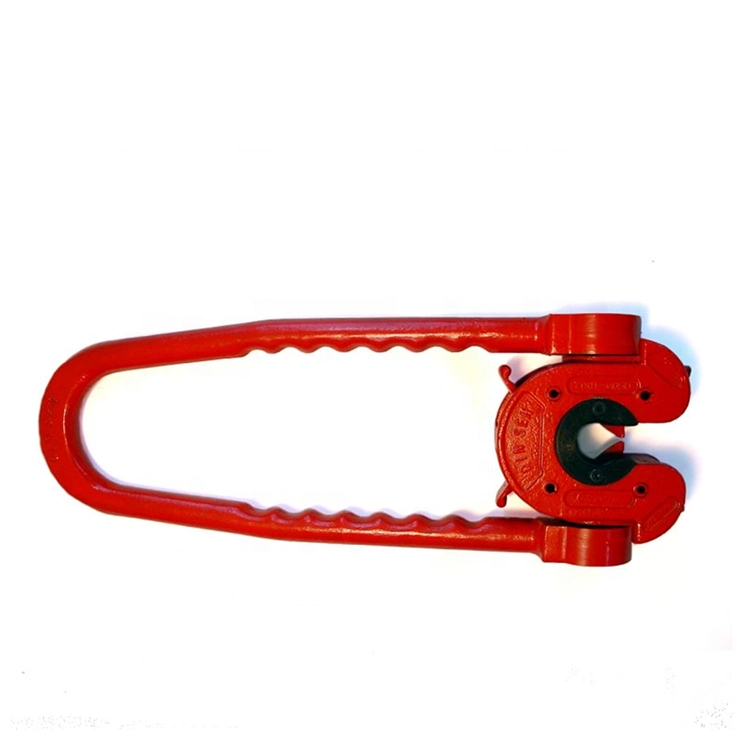
Modern workover operations rely heavily on the industry-standard DDZ Center Latch configuration. Center-latching mechanisms provide optimal vertical balance. They ensure secure, wrap-around engagement for sucker rods. Side-door alternatives often struggle with axial load distribution under severe strain. The center-latch architecture inherently forces the load into the strongest part of the elevator body. This design prevents side-loading, which is a primary cause of premature metal fatigue and sudden catastrophic failure.
Materials and Manufacturing Processes
You cannot compromise on metallurgy. Hoisting tools require high-grade, heat-treated cast steel or specialized stainless steel alloys. Heat treatment aligns the metallic grain structure, significantly increasing yield strength.
Casting Integrity: Manufacturers must utilize advanced casting techniques to eliminate internal voids. Micro-porosities inside the metal act as stress concentrators during heavy pulls.
Surface Treatments: Industrial spray-paint surface treatments do more than look good. They seal the outer layer against corrosive degradation. Harsh well intervention scenarios expose tools to saltwater, hydrogen sulfide, and caustic drilling fluids. A proper protective coating prevents surface micro-fractures from expanding into fatal cracks.
Ergonomics and Rig Floor Reality
Engineers often forget the human element. The physical weight of the tool directly impacts the derrickman's stamina. A poorly balanced tool accelerates operator fatigue. Fatigue leads directly to dropped objects and latching errors. Superior handle design allows for secure grip even with oil-slicked gloves. The latching feedback must remain distinctly audible and tactile. A worker must feel the primary lock engage positively every single time. Vague latching mechanisms create dangerous situations where the rod string appears secure but remains vulnerable to slipping.
The Evaluation Framework: Matching Rod Size to Load Capacity
The Sizing Matrix
Procuring hoisting equipment requires strict adherence to dimensional realities. You must match the elevator's bore size to the corresponding rod size flawlessly. Standard operations cover a diverse range from 1/2", 5/8", 3/4", 7/8", 1", up to 1-1/4" rods.
Below is a simplified reference chart detailing common dimensional matching requirements:
Sucker Rod Size (Inches) | Elevator Bore Diameter (mm) | Standard Configuration | Primary Application Segment |
1/2" to 5/8" | 16 to 20 | Center Latch (DDZ) | Shallow well servicing |
3/4" to 7/8" | 22 to 26 | Center Latch (DDZ) | Standard workover operations |
1" to 1-1/8" | 29 to 32 | Center Latch (DDZ) | Deep well rod pulling |
1-1/4" | 36+ | Center Latch (DDZ) | Heavy-duty / High-liability wells |
Maximum Rated Capacity
Each size tier pairs with an engineered maximum rated capacity. Standard load tiers typically offer 20-ton and 25-ton maximum working loads. You must calculate the exact weight of the rod string, plus the drag forces and potential overpull margins. Never purchase a tool right at the boundary of its maximum rated capacity. Always engineer a safe working margin. Exceeding the ton rating dynamically stretches the steel past its yield point, causing invisible internal damage.
The Risk of Misalignment
Purchasing a "one-size-fits-all" solution is a dangerous engineering fallacy. Utilizing an improperly sized Sucker Rod Elevator invites disaster. An oversized bore reduces the contact area on the rod upset. This concentrates extreme pressure on a tiny surface, leading directly to neck damage. Conversely, an undersized bore prevents the latch from fully engaging its safety lock. Both scenarios ultimately result in rod slip. Dropping a rod string downhole causes massive operational delays and places the rig crew in immediate physical peril.
Lifecycle Management and API RP 8B Cross-Compliance
The Regulatory Ecosystem
Buying an API 8C certified tool represents only step one. Maintaining its certified status requires strict, continuous adherence to API RP 8B. This Recommended Practice governs the inspections, maintenance, and repair of all hoisting equipment. Regulatory bodies do not view these guidelines as optional. Ignoring API RP 8B nullifies your original API 8C certification and shifts massive legal liability onto the rig operator.
Inspection Categories
API RP 8B divides maintenance into four strict categories. You must progress systematically through these levels.
Category I: Daily visual observations performed by the rig crew. They check for obvious cracks, missing cotter pins, and proper latch spring tension.
Category II: More thorough visual inspections during rig-up or rig-down phases. Supervisors look for excessive wear on the load-bearing shoulders.
Category III: Formal, scheduled inspections involving Magnetic Particle Inspection (MPI) or other Non-Destructive Testing (NDT) methods. This detects microscopic surface cracks on critical load paths.
Category IV: Complete equipment teardown. Technicians perform comprehensive NDT on all individual components. They measure dimensional wear against OEM factory tolerances.
Recertification Realities
Field inspectors actively search for documentation gaps. They will immediately ground a rig if your equipment lacks a documented maintenance log. Up-to-date OEM or third-party recertification is mandatory. A pristine-looking tool without a Category III/IV paper trail is legally considered a broken tool. Keep your data books on site, properly updated, and readily accessible.
Vendor Shortlisting: Criteria for Procurement and Rental
API Licensing vs. "API Compliant" Claims
Vendors often use deceptive language. Warn your procurement teams against manufacturers who claim their products are "built to API standards." This phrase holds zero legal weight. A tool is only legitimate if the manufacturer holds a current, verifiable API license number. The API monogram must be physically stamped onto the equipment body. Without this stamp, you are buying an unverified prototype, not an engineered product.
Quality Management Systems
Do not trust a vendor's internal promises. Require verifiable ISO 9001:2015 certification. Furthermore, demand evidence of third-party facility audits. SGS reports or similar independent inspections prove manufacturing consistency. A factory might build one perfect tool for testing, but robust Quality Management Systems ensure the thousandth tool is just as safe as the first.
Traceability and Documentation
A qualified vendor hands over comprehensive data books with every purchase. These books are your shield against liability. You must secure Material Test Reports (MTRs) tracing the exact steel batch used in your batch. Require physical proof load test certificates signed by certified engineers. Additionally, the vendor must supply clear operational manuals featuring detailed exploded parts views to support your field mechanics.
Customization and Aftermarket Support
Evaluate a vendor's capacity for long-term support. Field operations break things. You need rapid OEM parts replacement to minimize downtime. Evaluate their overseas support network if operating internationally. Can they provide specific field-condition customizations? A strong vendor acts as a partner, ensuring your equipment stays compliant and functional through years of brutal well intervention cycles.
Conclusion
Selecting the right production hoisting equipment is fundamentally a high-stakes risk-management decision. Engineering facts must always override procurement conveniences. Relying on unverified specifications exposes your crew to unacceptable dangers and your company to massive liabilities.
Take immediate action on your rig floor today. First, audit your current hoisting equipment against strict PSL 1 and PSL 2 standards. Second, cross-reference your tools against detailed load matrices to ensure perfect dimensional matching. Finally, demand verifiable API license numbers and updated Category III/IV inspection logs during your next procurement or maintenance cycle. Safety requires evidence, not assumptions.
FAQ
Q: What is the difference between PSL 1 and PSL 2 in API Spec 8C?
A: PSL 1 serves as the standard baseline requirement for general hoisting operations. PSL 2 introduces highly stringent supplementary mandates. It requires extensive non-destructive testing, strict material toughness verification, and thorough documentation. Operators specify PSL 2 for higher-risk scenarios, extreme temperatures, or sour gas environments.
Q: How often should a sucker rod elevator undergo NDT inspection?
A: Inspection frequency is strictly governed by API RP 8B. Hoisting tools typically require comprehensive Category III or IV inspections, which include NDT. Operators schedule these based on usage cycles and environmental severity. Most standard rig operations mandate these deep inspections annually or bi-annually.
Q: Can any center latch elevator be used for sucker rods?
A: No. Elevators must be specifically bored and load-rated for exact sucker rod dimensions. Substituting drill pipe or casing elevators causes dangerous load misalignment. Proper sizing prevents catastrophic slippage, neck damage, and severe safety hazards on the rig floor.


