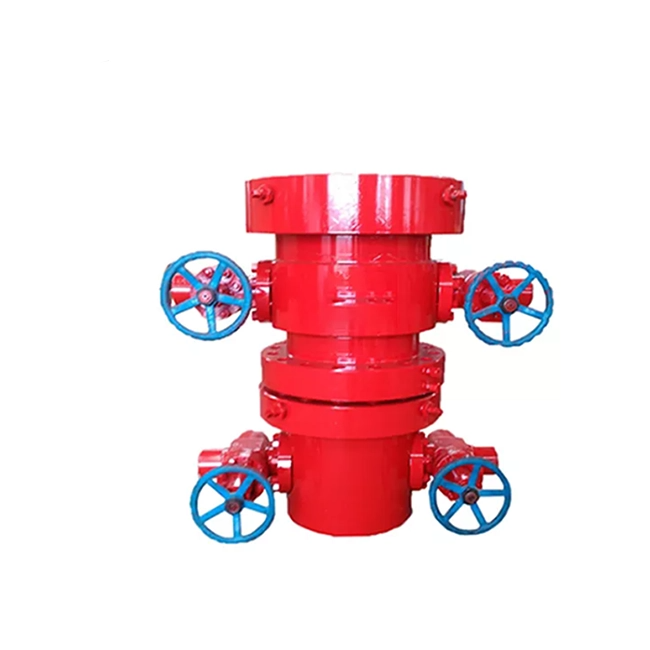
In wellhead architecture, mis-specifying spool configurations can lead to critical losses in pressure control, non-productive time (NPT) during drilling, or compromised well integrity during the production phase. You cannot afford ambiguity when selecting these critical barriers. If you choose the wrong pressure rating or incompatible internal profiles, you risk catastrophic failures.
While both components operate as stackable pressure-containing vessels governed by API 6A, their installation timing, load-bearing profiles, and internal sealing mechanisms serve entirely distinct phases of the well lifecycle. They look similar on a schematic, but they perform vastly different engineering tasks. We must evaluate them based on their unique operational demands.
This article provides a technically rigorous breakdown of the Tubing Head Spool and the Casing Spool. We will help drilling and completion engineers evaluate, specify, and procure the correct wellhead assets. You will learn to match these components perfectly to anticipated pressures, fluid profiles, and completion designs.
Key Takeaways
Position in Stack: Casing spools are intermediate components installed during the drilling phase, whereas the tubing head spool is the uppermost wellhead component installed prior to completion.
Load & Function: Casing spools suspend intermediate or production casing strings; tubing head spools suspend the tubing string and provide the mounting base for the Christmas tree.
Pressure Management: Tubing head spools typically manage the highest dynamic surface pressures (MASP) and produced fluids, requiring stringent secondary sealing mechanisms.
Standardization: Both must comply with API 6A and NACE MR0175 (for sour service), but their Product Specification Levels (PSL) may differ based on respective exposure risks.
Structural Hierarchy: Position in the Wellhead Assembly
To understand wellhead spools, we must first establish the baseline foundation. The casing head serves as the permanent, welded anchor for the entire assembly. You weld or thread it directly to the surface casing. It bears the initial mechanical load and provides the starting point for all subsequent stack additions.
The casing spool steps in next to play a modular role. You flange it directly to the top of the casing head. If drilling requires multiple casing strings, you can stack several casing spools on top of one another. Each spool allows the wellhead to grow vertically as you drill deeper hole sections and run subsequent casing strings. They stage the wellhead architecture.
Finally, the Tubing Head Spool acts as the transitional crown of the wellhead. You bolt it directly onto the uppermost casing spool. It finishes the drilling phase assembly and serves as the structural foundation for the production Christmas tree. This component bridges the gap between the casing program and the production phase.
Visualizing the stack reveals a logical progression from drilling to completion. You start at the bottom and build upward. Because the internal bore dimensions shrink as the well deepens, these spools cannot be installed out of sequence. Each component relies on the geometric constraints of the one below it.
Core Functional Engineering: Support, Sealing, and Annular Access
Casing Spool Functions
Casing spools handle massive mechanical and hydraulic loads during the drilling phase. They perform three primary engineering functions:
Support: The internal bowl accommodates slip or mandrel casing hangers. These hangers suspend the immense weight of intermediate and production casing strings.
Sealing: The bottom flange houses pack-off assemblies. These secondary seals isolate the casing annulus, preventing fluids from migrating upward into the flange connection.
Access: The spool features flanged or studded side outlets. Engineers use these to monitor sustained casing pressure (SCP) or inject kill fluids during well control events.
Tubing Head Spool Functions
Once you reach total depth, the functional requirements shift from drilling support to production control. The uppermost spool manages this transition.
Support: It features a specialized straight or tapered bore. This precisely machined profile accepts the tubing hanger, which supports the entire weight of the production tubing.
Sealing & Control: You will find lockdown screws (often called tie-down screws) penetrating the top flange. These secure the tubing hanger against extreme thermal expansion and upward pressure thrusts.
Transition: It acts as the ultimate pressure barrier. It safely isolates the outer casing annulus from the highly pressurized reservoir fluids flowing up the tubing string.
Specification Criteria: API 6A Standards and Pressure Ratings
Engineering a reliable wellhead requires strict adherence to API 6A standards. Pressure ratings dictate the physical mass and internal geometry of every spool. These ratings span from 2,000 psi to 20,000 psi, but you calculate them differently depending on the spool type.
Casing spool pressure ratings correspond directly to the burst pressure of the specific casing string they support. As you drill deeper, the internal pressures rise, necessitating heavier casing and higher-rated spools. However, the Tubing Head Spool faces a much harsher reality. It must be rated for the Maximum Anticipated Surface Pressure (MASP) of the producing reservoir. Consequently, this topmost spool often requires a higher API 6A pressure class than the intermediate components below it.
Flange and gasket engineering also evolve as pressures increase. For applications up to 5,000 psi, engineers typically specify API 6B flanges using R or RX ring gaskets. When wellhead pressures exceed 10,000 psi, the system transitions to API 6BX flanges. These high-pressure connections demand BX ring gaskets. BX gaskets are pressure-energized. As internal wellbore pressure increases, it forces the gasket tighter against the flange groove, actively improving the seal integrity.
Metallurgy and fluid environments dictate material class selection. If the well produces hydrogen sulfide (H2S) or carbon dioxide (CO2), all wetted components must comply with NACE MR0175 standards to prevent sulfide stress cracking. Temperature classes also alter internal designs. Standard elastomer seals fail in thermal extreme environments. For operations like Steam Assisted Gravity Drainage (SAGD), where temperatures cycle from -50°F to +650°F, you must specify advanced metal-to-metal or graphite sealing mechanisms.
Side-by-Side Evaluation: Tubing Head Spool vs. Casing Spool
Understanding the exact differences between these two components prevents costly specification errors. The chart below provides a scannable decision matrix mapping their distinct characteristics.
Engineering Feature | Casing Spool | Tubing Head Spool |
Installation Phase | Drilling phase. Installed iteratively as new hole sections are drilled. | Completion phase. Installed once drilling concludes. |
Internal Bore Design | Standard bowl design tailored for slip or mandrel casing hangers. | Highly machined straight or tapered bores with alignment pins for complex hangers. |
Top Flange Configuration | Standard flange. Generally lacks lockdown screws for casing hangers. | Features integral lockdown screws to prevent tubing hanger unseating. |
BOP Interaction | Provides the mounting point for the BOP during the next hole section. | Provides the mounting point for the BOP during completion operations. |
To summarize the matrix:
You order casing spools to manage the staged casing program. They hold static weights.
You order a tubing head to manage dynamic reservoir forces. It requires lockdown mechanisms and precise alignment pins, especially when running dual completions.
You utilize the casing spool as a BOP base repeatedly. You only use the tubing head as a BOP base briefly before flanging up the Christmas tree.
Implementation Risks, Wear Factors, and Failure Modes
Field installations expose these spools to severe mechanical and environmental stress. Identifying common failure modes allows you to mitigate risks proactively.
Drilling wear and tear poses a massive threat to casing spools. As the drill string rotates and trips in and out of the hole, friction can easily gouge the internal spool profile. You must install wear bushings inside the spool before drilling resumes. These sacrificial sleeves protect the critical sealing areas and bowl geometries. Failing to use a wear bushing guarantees seal failure when you eventually land the hanger.
Thermal expansion and pressure upthrust threaten the topmost components. Produced fluids heat the tubing string, causing it to elongate. If the well shuts in, massive upward forces hit the tubing hanger. If technicians improperly torque the lockdown screws in the Tubing Head Spool, the hanger will unseat. This breaches the primary seal and floods the annulus with production pressure.
Secondary seal integrity demands perfection during installation. Both spools feature secondary seals in their lower flanges. Once installed, retrofitting or repairing these bottom pack-offs is incredibly difficult and dangerous. Emphasize strict quality control during rig-up. You must perform a hydrostatic test at 1.5 times the rated working pressure on these flange connections prior to resuming operations.
Finally, we must acknowledge emerging risks. Extreme applications, such as underground hydrogen storage, push traditional wellhead metallurgy to its limits. Standard steel alloys risk hydrogen embrittlement. Because hydrogen molecules are infinitesimally small, they bypass standard elastomers. These wells require low-permeation seal systems and specialized exotic alloys to maintain long-term integrity.
Procurement Logic: Specifying the Right Spools for Your Well Program
Engineers face a constant choice between standardization and customization. Off-the-shelf conventional spools work perfectly for standard onshore pads. They are readily available and proven. However, offshore platforms or space-constrained rigs often demand engineered custom solutions. In these cases, you might specify compact spool systems. Compact systems combine multiple spool stages into a single housing, saving vertical space and eliminating multiple leak paths.
You must meticulously match hangers to bores. Do not assume universal compatibility. Ensure the chosen bore perfectly accepts your intended completion tubing hanger. Modern completions frequently utilize downhole safety valves (DHSVs) or intelligent well gauges. The spool must accommodate the necessary control line penetrations. If the alignment pins do not match the hanger orientation, you will crush the control lines during installation.
Vendor due diligence finalizes the procurement process. Always verify Product Specification Level (PSL) documentation. API 6A defines PSL 1 through 4. A low-pressure water injection well might safely use PSL-1 or PSL-2. However, high-pressure gas wells near populated areas mandate PSL-3 or PSL-4 components. Demand comprehensive material traceability from the manufacturer. You need the paperwork to prove regulatory compliance and ensure long-term asset integrity.
Conclusion
Summary: While visually similar on a schematic, these two spools serve divided purposes. Casing spools manage structural staging and annular isolation during drilling. The tubing head spool acts as the ultimate pressure control gateway for reservoir production.
Final Verdict: Investing in proper engineering specifications up front prevents catastrophic well control incidents. You must rigorously evaluate your MASP, NACE compliance needs, and anticipated thermal ratings before selecting a product.
Next Action: We encourage drilling and completion engineers to consult directly with API 6A-certified wellhead manufacturers. Review your completion schematics together and perform comprehensive lifecycle load calculations before you issue any purchase orders.
FAQ
Q: Can a casing spool be used as a tubing head spool?
A: No. They lack the specific internal bore profile, alignment mechanisms, and upper flange lockdown screws required to safely suspend and secure a production tubing hanger against upward thrusts.
Q: Why does the tubing head spool often have a higher pressure rating than the casing spool below it?
A: The tubing head is directly exposed to the reservoir's maximum anticipated surface pressure (MASP) via the tubing string. Lower casing spools only manage the hydrostatic or annular pressures of shallower, lower-pressure formations.
Q: What is the function of the secondary seal in the bottom flange of a spool?
A: It isolates the flange connection from wellbore pressure. It also seals around the casing stub protruding from the section below. This isolation prevents sustained casing pressure (SCP) from migrating upward between different annular spaces.


