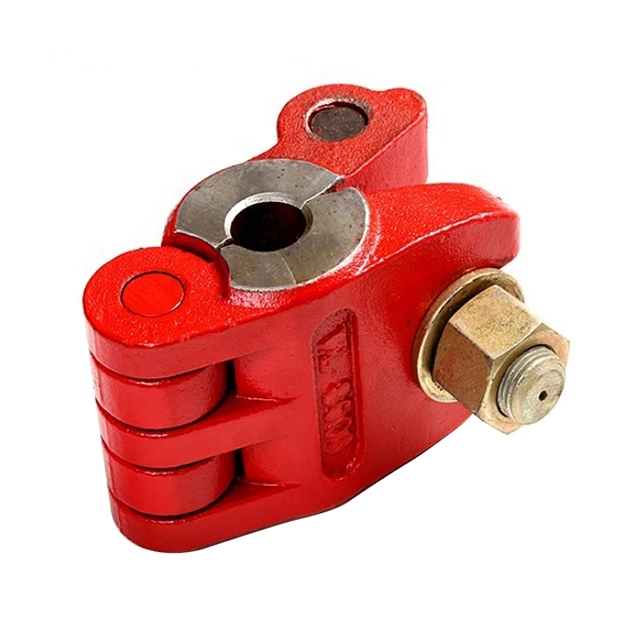
A polished rod clamp failure is rarely a minor wellhead inconvenience. When these crucial components fail, operators typically face a dropped rod string. This catastrophic event halts production instantly and creates severe safety hazards at the wellhead. Most field failures stem from a fundamental operational disconnect. Operators often mismatch equipment specifications against harsh environmental conditions like corrosion and constant frictional wear. Poor field installation practices further compound this problem.
Our primary goal is to bridge this costly knowledge gap. We provide production engineers and procurement teams an evidence-based breakdown. You will discover exactly why these systemic failures occur. We also offer a practical framework to help you evaluate, size, and maintain high-reliability wellhead equipment. By applying these standards, you protect your field crew. You also safeguard your daily production targets and extend your equipment lifespan.
Key Takeaways
Slippage and Over-Torquing: Improper installation practices account for the majority of premature clamp failures.
Load Mismatch: Utilizing clamps rated below the actual dynamic load of the rod string guarantees eventual metallurgical fatigue.
Corrosion and Wear: Harsh wellbore environments require specific material grades to prevent environmental stress cracking.
Proactive Evaluation: Upgrading to compliant, precisely machined Oilfield Polished Rod Clamps mitigates catastrophic risk.
The Business Impact of Clamp Failure in Artificial Lift Systems
Defining success for artificial lift components requires looking beyond basic functionality. A successful clamp deployment means zero slippage occurs during operation. It also means the component experiences predictable lifecycle degradation rather than sudden fracture. Operators must view these clamps as critical guardians of the wellbore.
The cost of inaction is severe. A dropped string guarantees significant financial and operational consequences. Operators face immediate deferred production. You must schedule expensive fishing operations to retrieve the string. A dropped rod often damages downhole pumps severely. It easily destroys stuffing boxes upon impact. Safety incidents escalate rapidly when high-tension components fail unexpectedly at the surface.
A major sourcing disconnect drives many of these incidents. Procurement teams often treat clamps as commoditized consumables. They base purchasing decisions on the lowest upfront price. However, treating these items as simple hardware leads to systemic failures. You must treat them as critical engineered components designed for extreme dynamic stress.
5 Common Causes of Polished Rod Clamps Failure
1. Improper Torque Application (Under/Over-Tightening)
Symptom: You will notice rod slippage or physically sheared clamp bolts.
Root Cause: Operators frequently apply uneven bolt tightening during installation. They ignore manufacturer torque specifications completely. Field crews often use unauthorized extensions, commonly known as "cheater bars". These extensions stretch the bolt threads far beyond their yield point. Once the threads stretch, the bolt loses its clamping force entirely.
2. Load Rating Exceedance (Undersizing)
Symptom: The clamp shows gross deformation. You might spot cracking at the hinge or bolt holes. Sudden catastrophic fracture occurs under load.
Root Cause: Engineers sometimes select Polished Rod Clamps based solely on static rod weight. They fail to account for dynamic loads. Fluid pounding creates massive upward and downward shockwaves. Peak Polished Rod Load (PPRL) easily exceeds the static weight by large margins. Undersizing guarantees eventual metallurgical fatigue.
3. Environmental Corrosion and Pitting
Symptom: You observe surface degradation and localized pitting. These pits quickly turn into deep stress fractures.
Root Cause: Wellbore environments expose surface equipment to harsh elements. High concentrations of Hydrogen Sulfide (H2S) or Carbon Dioxide (CO2) attack standard steel. Highly saline produced water accelerates this degradation. Selecting clamps without appropriate material grades or protective coatings invites environmental stress cracking.
4. Frictional Wear and Profile Degradation
Symptom: The clamp experiences a total loss of gripping capability. Crews must constantly retighten the bolts.
Root Cause: Mismatched rod and clamp sizing creates poor surface contact. Another major issue is equipment reuse. Reusing old clamps on new polished rods transfers worn contact profiles onto the new steel. The worn gripping channels cannot hold the necessary friction required for heavy lifting.
5. Fatigue from Misalignment and Vibration
Symptom: Micro-cracking appears along the body. This cracking propagates into complete structural failure over time.
Root Cause: Pumping unit misalignment causes the polished rod to bend. It may also vibrate excessively during the upstroke and downstroke. This movement transfers cyclical fatigue stress directly into the clamp body. Even perfectly sized equipment will fail under constant lateral vibration.
Evaluation Criteria for Sourcing Oilfield Polished Rod Clamps
Choosing the right configuration prevents most field failures. You must understand the specific mechanical demands of your wellhead. Evaluating single-bolt versus multi-bolt configurations provides a clear baseline for safe lifting operations.
Clamp Configuration | Optimal Application | Key Advantage | Typical Load Capacity |
Single-Bolt | Shallow wells, low load operations | Quick installation, lightweight | Up to 25,000 lbs |
Double-Bolt | Medium depth, standard production | Better load distribution, higher friction | 25,000 to 40,000 lbs |
Multi-Bolt (3+) | Deep wells, heavy heavy strings | Maximum surface contact area | 40,000+ lbs |
When dealing with extreme loads, operators should deploy dual-clamp setups. Stacking two clamps provides critical safety redundancy. If the primary unit slips slightly, the secondary unit catches the load immediately.
Your sourcing decisions must connect features to specific operational outcomes. Material specifications require close attention. Look for high-tensile, heat-treated steel alloys. These materials offer a verifiable balance of strength and ductility. Brittle steel shatters under shock loads. Ductile steel grips the rod securely. Machining tolerances are equally important. Precision-bored gripping channels ensure maximum surface contact. Perfect surface contact prevents dangerous stress concentrations.
Compliance and safety standards separate premium equipment from dangerous commodities. Emphasize the absolute necessity of sourcing properly manufactured components. Equipment must align under strict API criteria, such as API Spec 11L or 11B equivalents where applicable. Manufacturers must provide traceable heat lots. This traceablity ensures metallurgical consistency across the entire production batch.
Vendor trustworthiness dictates your long-term success. Advise your buyers to demand Material Test Reports (MTRs) before purchasing. You should also require verifiable Safe Working Load (SWL) limits. Avoid any suppliers unable to provide underlying engineering data. If a vendor cannot prove their load ratings, they introduce massive risk to your operation.
Implementation Realities: Installation and Maintenance Protocols
Field rollout lessons teach us a hard truth. Even the highest-quality equipment fails poorly installed. Emphasize Standard Operating Procedures (SOPs) across your entire field crew. Standardized installation separates reliable wells from problematic ones.
Strict torque protocols save lives and equipment. Mandate the use of calibrated torque wrenches for every single installation. Field teams must utilize alternating tightening sequences. A cross-pattern tightening method ensures perfectly even load distribution. Tightening one side completely before the other warps the internal bore. This warping destroys the gripping profile instantly.
A rigorous inspection framework turns reactive maintenance into proactive safety. Implement visual inspection schedules alongside Non-Destructive Testing (NDT) programs. Field crews must know exactly what symptoms require immediate action.
Visual Inspections: Check for elongated bolt holes, stretched threads, and visible surface pitting weekly.
NDT Schedules: Use magnetic particle inspection annually on high-load wells to find micro-fractures.
Replace vs. Reuse Criteria: Define absolute rules for your field hands. If a clamp drops a string, you must discard it immediately. The invisible fatigue damage from the shock load makes reuse incredibly dangerous.
Shortlisting Logic: Upgrading Your Wellhead Equipment
Upgrading your wellhead inventory requires logical auditing. Develop a clear decision matrix to evaluate your current operations. Identify specific wells demonstrating high failure rates. Look closely at deep or heavy string deployments. Corrosive environments also serve as primary candidates for immediate equipment upgrades. These high-risk wells need premium Oilfield Polished Rod Clamps to maintain safe operations.
Evaluate your suppliers based on technical support capability. Good vendors provide transparency in their load testing procedures. They also offer availability for customized solutions. Sometimes specialized rod sizes require unique bore profiles. Your vendor should accommodate these engineering challenges quickly.
We recommend a phased approach for upgrades. Conduct a focused pilot program first. Install evaluated clamps on a small subset of high-risk wells. Track torque retention strictly over a 90-day period. Measure any signs of slippage or degradation. Once the pilot proves successful, roll the new standards out for fleet-wide adoption.
Conclusion
Polished rod clamp failures remain largely preventable. Achieving reliability requires rigorous sizing calculations and strict material evaluation. Your field teams must practice strict adherence to torque specifications during every installation. Equipment quality and human execution must work together seamlessly.
Decision-makers must take immediate action. Audit your current sourcing specifications today. Eliminate undersized or structurally compromised clamps from your existing inventory. By treating these components as critical engineering assets, you safeguard your production targets. More importantly, you protect the field personnel working near the wellhead.
FAQ
Q: How often should polished rod clamps be replaced?
A: Replacement depends strictly on wear indicators rather than a calendar timeline. Inspect the internal gripping profile regularly. If the bore shows polishing, grooving, or deformation, replace it immediately. Furthermore, apply a strict post-incident rule. If a clamp experiences a dropped string or severe fluid pound event, discard it. Shock loads cause invisible micro-fractures.
Q: When should operators use a dual-clamp setup?
A: Operators should use a dual-clamp setup when the Peak Polished Rod Load (PPRL) approaches 80% of a single clamp's Safe Working Load limit. Deep wells and heavy fiberglass strings frequently cross this threshold. Stacking two units provides critical safety redundancy. If the primary grip slips, the secondary unit prevents a catastrophic dropped string.
Q: Can a slipping clamp be fixed by over-torquing the bolts?
A: No. Over-torquing is a dangerous field misconception. Using cheater bars to over-torque stretches the bolt threads beyond their structural yield point. This actually reduces clamping force and guarantees thread shear under dynamic load. If a properly torqued clamp slips, it means the equipment is undersized or structurally worn out.


