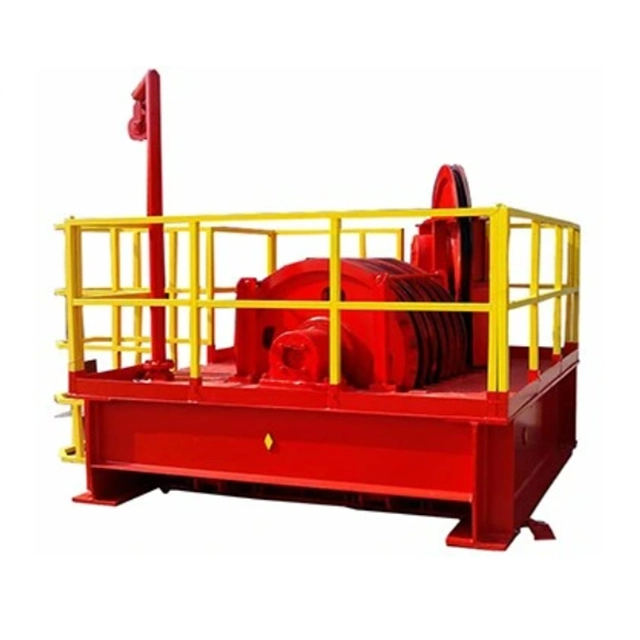
The reality of B2B heavy equipment procurement is shifting rapidly. Today, buyers complete up to 80% of their research alone. They do this long before ever contacting a vendor. Buying committees face a very specific tension when purchasing a Drilling Rig Crown Block. They must balance the demand for immediate operational speed against rigorous risk mitigation. Stakeholders require strict safety compliance. They also demand proven, long-term reliability in the field.
This article serves as an objective, guide-first evaluation tool. We designed it carefully to help complex buying committees. Engineering, operations, and finance teams can use this guide to align their priorities. You will learn how to evaluate technical realities and hidden maintenance impacts. We also cover key implementation variables of the TC Series versus conventional market alternatives. This knowledge will help you make a confident, consensus-driven purchasing decision.
Key Takeaways
De-risking is the primary metric: Modern procurement prioritizes solutions that prevent "FOMU" (Fear Of Messing Up) by ensuring API compliance and minimizing catastrophic Non-Productive Time (NPT).
TCO over initial CapEx: The true cost of a drilling rig crown block is dictated by sheave bearing lifespan, wire rope wear rates, and maintenance accessibility, not just the upfront invoice.
Vendor expertise matters: 53% of long-term B2B vendor loyalty stems from the purchasing and implementation experience; buyers should evaluate engineering support and parts availability as heavily as the steel itself.
Multi-stakeholder alignment: Successful evaluation requires mapping the structural integrity (for the Chief Engineer) alongside the lifecycle ROI (for the CFO).
The Complex Buying Committee: Mapping Hardware Specs to Stakeholder Needs
Complex B2B purchases often trap buyers in a dangerous status quo. In fact, 38% of these decisions end in absolutely no action. Committee paralysis usually causes this massive failure rate. A successful equipment purchase requires aligning very different stakeholder needs quickly.
The Chief Engineer focuses heavily on load distribution mechanics. They demand verifiable engineering data over shiny marketing claims. They check API Spec 4F, 8A, and 8C compliance meticulously. Sheave groove hardening remains a top priority for their team. They need absolute proof of metallurgical integrity. A failure here risks catastrophic structural collapse.
The Operations Director cares most about daily operational speed. They want ease of lubrication to prevent non-productive time. They need strict assurance regarding seamless mechanical integration. The new equipment must fit the existing traveling block perfectly. It must also align seamlessly with the current top drive system. Friction during rig-up ruins their quarterly performance metrics.
The Financial Officer focuses on mitigating broad macroeconomic risks. They require highly predictable lifecycle maintenance schedules. They also demand absolute warranty transparency from the vendor. You must present them reliable, long-term operational projections. They hate financial surprises hidden in complex maintenance manuals.
TC Series Drilling Rig Crown Block: Core Engineering Baselines
Evaluating heavy equipment requires looking closely at core engineering baselines. The TC Series provides specific, verifiable advantages in these areas. You must look past the paint and examine the steel.
First, consider overall structural integrity and frame design. The heavy-duty steel framework ensures maximum operational stability. Weldment quality undergoes strict non-destructive testing procedures. Advanced stress-relief processes enhance the static load capacity ratings significantly. This foundational strength prevents dangerous micro-fractures under heavy cyclic loading.
Next, examine the sheave and bearing architecture closely. The specific sheave cluster configuration distributes extreme weight efficiently. Double-row tapered roller bearings define the true operational lifespan. High-grade material specifications keep performance incredibly consistent under immense pressure. Better bearings mean fewer unexpected shutdowns mid-drilling.
Wireline protection systems also play a crucial financial role. Engineers designed highly specific sheave groove profiles for this unit. These profiles and optimal fleet angles minimize expensive drilling line wear. This design significantly reduces ongoing operational replacement expenses. Preserving your wire rope saves massive amounts of money annually.
Finally, standard safety and anti-collision features protect your valuable crew.
Bumper blocks absorb accidental high-velocity impacts safely.
Dedicated sandline sheaves manage secondary lines without tangling.
Fastline and deadline routing protect surrounding capital equipment.
Integrated slip-resistant walkways keep rig personnel secure during inspections.
Head-to-Head: TC Series vs. Conventional Market Alternatives
Transparency matters deeply when comparing heavy oilfield equipment. We avoid generic vendor-bashing in our technical evaluations. Instead, we offer a highly objective look at market alternatives. Sometimes a basic competitor model might be completely sufficient. Often, the TC Series excels in demanding, high-stress environments.
Consider the critical weight-to-capacity ratio first. The physical footprint of the TC Series is highly optimized. We compare its operating weight directly against leading conventional competitors. This specific ratio impacts rig mast design heavily. It also dramatically affects global transportation logistics and freight costs.
Maintenance accessibility creates a truly frictionless operational experience. Conventional models often require highly complex disassembly routines. Replacing a simple bearing becomes a massive, multi-day chore. Centralized lubrication usually remains an expensive aftermarket add-on for competitors. The TC Series completely changes this harsh reality. Grease zerks are highly accessible from safe standing positions. Sheave pin removal processes are remarkably straightforward. Integrated safety railings make routine checks much safer for everyone.
Customization versus standardization also impacts your project timeline. Heavily customized competitor blocks suffer from notoriously long lead times. The TC Series uses a standardized, modular engineering approach. This guarantees faster delivery without sacrificing structural quality or safety.
Comparison Chart: TC Series vs. Conventional Alternatives | Feature Category | TC Series Standard | Conventional Market Baseline |
| Bearing Accessibility | Direct access, quick sheave pin removal | Complex disassembly, specialized hoisting required |
| Lubrication System | Integrated centralized grease zerks | Often sold as an aftermarket add-on |
| Delivery Lead Time | Standardized modular design, rapid delivery | Heavily customized, extended wait times |
| Wireline Friction | Optimized fleet angles reduce rope wear | Standard angles cause higher friction rates |
Lifecycle Operational Impact: Moving Beyond the Initial Quote
Evaluating major equipment requires moving far beyond the initial quote. Focusing only on upfront numbers creates a dangerous operational illusion. Opting for the lowest bid often results in exponential long-term headaches. Premature wire rope degradation causes massive logistical nightmares. Sudden bearing failures halt entire drilling operations instantly.
Predictive maintenance demands the absolute right tooling. You must assess the specialized tools required for routine servicing. Some conventional competitor models require highly expensive proprietary tools. The TC Series allows crews to use standard rig-floor equipment safely. This simple approach streamlines routine maintenance schedules immensely. It empowers your existing crew to handle repairs faster.
Supply chain velocity also determines your ongoing operational success. A piece of heavy equipment is only as good as its replacement parts. You should evaluate the historical performance of your chosen vendor closely. Delivering replacement sheaves and pins within 24 to 48 hours is critical. Fast delivery prevents catastrophic downtime and keeps operations running smoothly. Ask your vendor to prove their spare parts inventory levels.
Implementation Realities: Lead Times, Integration, and Vendor Expertise
B2B buyers value speed and proven expertise over broad brand awareness. The actual purchasing experience serves as a major market differentiator. You should evaluate technical competence strictly during the quoting phase. A strong engineering support team proves their immense worth early.
Mechanical integration requires highly careful planning. You must mate the new block perfectly with existing systems.
Verify strict compatibility with current rig substructures.
Align operational specifications with your existing drawworks.
Check exact structural load requirements of the rig mast.
Ensure proper spatial clearance for your top drive system.
Delivery and commissioning carry their own specific risks. Global shipping logistics can delay your critical project for weeks. Site-acceptance testing ensures absolute operational readiness upon arrival. Having vendor technicians present during the initial rig-up provides deep peace of mind. They can troubleshoot integration issues immediately on the pad.
Evaluation Framework: How to Build Your Shortlist
Building a solid shortlist requires a strict evaluation framework. You must aggressively separate "must-haves" from simple "nice-to-haves." Establish non-negotiable static load limits immediately during committee meetings. Strict API certifications cannot be compromised under any circumstance.
Demand absolute proof of performance from all evaluated vendors. Deep transparency is key to building real commercial trust. Request detailed metallurgical test reports for all load-bearing components. Ask for third-party inspection certificates to verify internal claims. Require verified case studies of the equipment operating in harsh environments. Extreme cold weather or high-corrosion offshore scenarios prove true hardware durability.
Finally, conduct a thorough de-risking workshop with your team. Do this carefully before issuing any final purchase order. Require the vendor to map out a severe failure-mode scenario. Ask them exactly how fast they can respond to an emergency. A catastrophic sheave failure on a Friday night tests a vendor truly. Their detailed answer will reveal their true operational capability.
Conclusion
Choosing the right heavy equipment is a major strategic decision. It requires balancing strict risk tolerance against daily operational longevity. It goes far beyond a simple feature-to-feature spec comparison.
The winning engineering solution removes friction for the entire buying committee. It provides undeniable load data for the technical team. It guarantees predictable long-term reliability for the finance team. It ensures seamless daily operations for the hardworking rig crew.
As a next step, consolidate your specific rig mast specifications. Request a customized operational maintenance analysis from your selected vendor. Ask for a technical digital sales room package immediately. Share this verified data securely with your internal stakeholders to drive consensus.
FAQ
Q: What API certifications are standard for the TC Series?
A: The TC Series strictly complies with API Spec 4F, 8A, and 8C standards. This rigorous verification ensures all manufacturing processes adhere to recognized global safety rules. It also guarantees compliance with extreme static load requirements.
Q: How does the sheave configuration impact wire rope longevity?
A: The equipment features advanced groove hardening processes. It also utilizes highly optimized fleet angles. These specific engineering details significantly reduce frictional wear on expensive drilling lines. This extends their useful operational life dramatically.
Q: Can the TC Series be retrofitted onto an older rig mast?
A: Yes, but it requires an honest assessment of your structural requirements. You must verify mounting footprint compatibility carefully. We highly recommend scheduling an engineering consultation to ensure safe retrofits.
Q: What is the standard lead time compared to industry averages?
A: Thanks to a standardized, modular engineering approach, delivery timelines are typically faster. We beat heavily customized conventional alternatives easily. We set highly realistic expectations for manufacturing and testing based on current supply chain realities.


