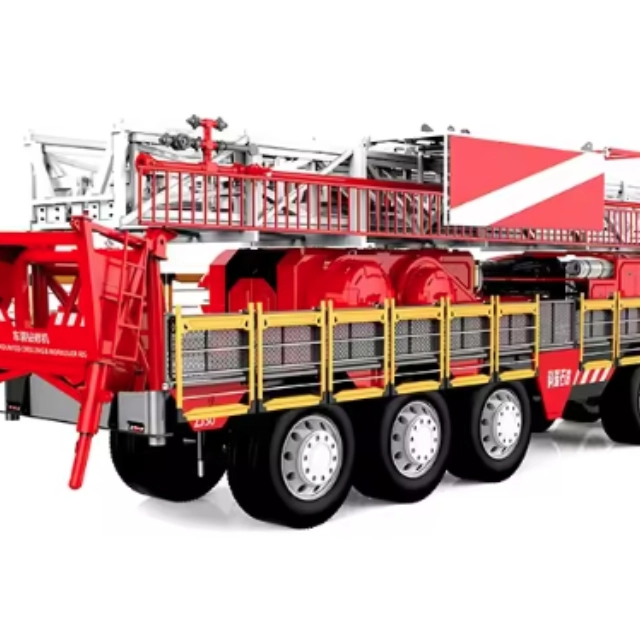
Managing mature oil and gas assets demands precise and highly cost-effective well interventions. Conventional skid-mounted rigs often create severe operational bottlenecks in modern fields. They incur prohibitive non-productive time (NPT) during complex mobilization and demobilization phases. High-frequency workover operations require a major strategic shift today. We see operators rapidly turning toward highly mobile, self-propelled units to compress project timelines. They want to aggressively reduce daily logistics overhead. Deploying a specialized Truck-Mounted Drilling Rig Workover Rig allows operators to maintain heavy-duty pulling capabilities. At the same time, it drastically cuts transportation and rig-up costs. This article gives you an evidence-based framework for evaluating these agile mobile solutions. Procurement managers and drilling engineers will learn how to shortlist and deploy these units effectively. You can easily optimize site efficiency without compromising on crucial safety or compliance standards.
Key Takeaways
Rapid Deployment Metrics: Mobile rigs can compress mobilization/demobilization times by up to 40% compared to traditional configurations, directly impacting daily operating ROI.
Capacity vs. Footprint: Modern truck-mounted units bridge the gap between heavy pulling capacity and strict road-weight/spatial constraints.
ESG & Compliance Integration: Upgraded mobile rigs align with modern emissions standards (e.g., Tier 4 Final) and environmental regulations for sensitive geotechnical areas.
TCO Evaluation: True procurement value is measured not just by upfront capital expenditure, but by lifecycle maintenance costs, fleet versatility, and OEM support structures.
The Business Case for Mobility: Reframing Well Intervention Economics
Routine maintenance, plug and abandonment (P&A), and integrity testing require frequent site visits. Using stationary rigs creates a compounding financial drain for operators. Multi-day rig-up and rig-down processes consume valuable working hours. They heavily inflate non-productive time (NPT) across your intervention campaigns. A stationary setup demands multiple hauling trucks for basic transport. This slows down the critical transition period between neighboring wells.
We define operational success by how fast a crew completes a well and moves. High efficiency means putting fewer heavy hauling trucks on regional roads. It means achieving faster well-to-well transitions during intensive service campaigns. A modern mobile setup slashes mobilization days into mere hours. Operators notice immediate financial improvements when measuring daily output.
Let us compare the financial dynamics of mobile fleets against contracted stationary rigs. We focus specifically on short-duration intervention campaigns. Stationary units require massive upfront logistics spending just to reach the site. Mobile fleets reduce overall operational expenses significantly. They brilliantly combine transport mobility and operational hardware into one unified package.
Short campaigns heavily favor the fast deployment of a self-contained unit. You save substantial money by eliminating secondary transport contracts. We can observe the direct financial benefits through a simple comparative baseline.
| Operational Phase | Conventional Stationary Rig | Truck-Mounted Mobile Rig |
| Mobilization Time | 2 to 4 Days | 4 to 8 Hours |
| Transport Logistics | Requires 5+ Flatbed Trucks | Self-Propelled (1 Unit) |
| Rig-Up Crew Size | Large (Complex Assembly) | Small (Automated Mast) |
| Well-to-Well Transition | Slow and Costly | Rapid and Efficient |
You can see how mobility directly enhances intervention economics. Fleet managers maximize their resource allocation. They spend fewer hours managing external logistics vendors. Your crews focus entirely on the actual well intervention tasks.
Core Capabilities of a Modern Truck-Mounted Drilling Rig Workover Rig
To understand the real value, we must map engineering specifications to operational outcomes. Modern mobile units pack immense lifting power into a highly restricted footprint. They perform complex interventions previously reserved for massive stationary towers.
Engineering Specifications to Operational Outcomes
You must evaluate static hook load capacities carefully during procurement. A specialized Truck-Mounted Drilling Rig Workover Rig provides robust drawworks capable of lifting heavy pipe strings. Hydraulic extension mechanisms dictate how easily your crews manage varying well depths. Smooth hydraulic controls allow operators to handle delicate pulling operations.
Rapid inter-site transit requires excellent off-road vehicle mobility. Engineers assess axle load distributions strictly to prevent structural chassis fatigue. Road-legal compliance guarantees you can move equipment without expensive special permits. High-performance powertrains ensure vehicles navigate rough oilfield terrain safely. Modern 8x4 or 10x6 drive configurations provide exceptional traction on muddy access roads.
Integration with Advanced Diagnostics
Modern mobile rigs integrate perfectly with advanced wellhead diagnostics. They accommodate digital logging and sensitive wireline operations natively. Crews conduct real-time well integrity testing continuously. They use built-in tool slots without requiring secondary support units on site. This deep integration keeps the overall well pad footprint extremely small. It simplifies power distribution since you run fewer auxiliary diesel generators.
Complex Environment Handling
Complex operating environments demand exceptional spatial efficiency from your equipment. You often work in tightly spaced multi-well pads. Ecologically sensitive terrains strictly limit acceptable surface disturbance. We evaluate deck layouts to maximize safe working zones for the crew. Smart engineering packs mud handling and pipe storage neatly together. You get heavy pulling capacity without destroying the surrounding landscape or violating pad boundaries.
Evaluating Rig Performance: Technical Trade-Offs and Limitations
We must address the "one-size-fits-all" myth transparently. Mobile units offer incredible operational speed, but they possess firm physical limits. Recognizing these boundaries ensures safe and profitable deployments.
The "One-Size-Fits-All" Myth
A highly compact unit naturally restricts maximum pulling depths. Deck space remains limited for auxiliary mud pumping systems. You cannot fit massive shaker screens on a standard commercial truck frame. Knowing these spatial constraints prevents costly operational failures. You must match the rig capacity to the specific well depth profile.
Reliability Under Continuous Load
Operators must analyze component reliability under continuous heavy loads. Vehicle-mounted hydraulic systems often share power across the rig operations. Standalone industrial power packs isolate their load differently. Mobile rigs experience unique wear-and-tear patterns over their operational lifespan. Prolonged heavy pulling stresses the combined vehicular system differently than stationary equivalents. We recommend strict preventative maintenance schedules for the carrier hydraulics.
Weather and Terrain Constraints
Weather and terrain conditions create hard engineering constraints. High winds challenge the hydraulic mast stability severely. Low-bearing-capacity soils threaten the outrigger footprint during heavy pulls. Crews must deploy proper guylines in adverse weather environments. You have to assess the soil stability thoroughly before extending the mast.
Common Mistakes to Avoid in the Field:
Failing to inspect outrigger pads daily on exceptionally soft soils.
Ignoring wind load calculations before fully extending the hydraulic mast.
Neglecting hydraulic fluid temperatures during continuous high-load pulling.
Guessing total road weight before crossing regional load-restricted bridges.
Skipping guyline tension checks after major temperature shifts.
Navigating ESG Compliance and Energy Efficiency Standards
Global oilfield operations face increasingly strict environmental scrutiny today. Equipment must meet rigorous energy efficiency frameworks continuously. Reducing harmful emissions stands as a primary operational goal for modern producers.
Emissions Reductions
Operators evaluate prime mover engine choices closely. Tier 4 Final diesel engines represent the current industry standard. They slash particulate matter and nitrogen oxide emissions dramatically. Some premium units integrate hybrid battery-assist technologies into the drivetrain. These advanced power systems lower overall fuel burn substantially. They reduce greenhouse gas emissions during idle standby modes. They align perfectly with global oilfield energy efficiency frameworks.
Environmental Protection
Environmental protection goes far beyond tracking exhaust gases. Modern designs integrate active spill containment pans underneath critical manifolds. Engineers install specialized noise mitigation enclosures around heavy diesel engines. Geotechnical and environmental drilling scenarios require highly sensitive approaches. Crews utilize low-impact tires or advanced tracked chassis options. These modular components minimize ground pressure and protect fragile topsoil from severe rutting.
Safety Assurance
Safety assurance remains completely non-negotiable in well interventions. High-speed mobile operations expose crews to unique mechanical risks. Upgraded designs feature sophisticated automated pipe-handling capabilities. Fall protection systems protect derrick hands during the rapid rig-up phase. Mechanical safety interlocks prevent accidental mast retraction under load. You secure the site while keeping your specialized workforce entirely safe.
Procurement Checklist: Shortlisting Your Next Workover Rig Partner
Selecting the right manufacturing partner dictates your long-term success. Procurement teams must scrutinize several critical factors before signing any contracts. A premium piece of equipment loses value quickly without proper support.
Component Provenance
You must scrutinize the origin of critical wear parts. Hydraulics, braking systems, and heavy-duty winches require constant maintenance. Ensure replacement parts remain readily available in your specific operating region. Relying on obscure international components introduces massive supply chain risks. Delays in parts delivery destroy your carefully planned NPT metrics.
Lifecycle Support & OEM Expertise
Next, evaluate lifecycle support and OEM technical expertise. A good manufacturer provides extensive operator training programs. We look for guaranteed global field service availability. Warranty execution must remain fast, simple, and entirely transparent. Reliable OEM support keeps your Truck-Mounted Drilling Rig Workover Rig running smoothly year after year. Ask vendors for case studies detailing their service response times.
Customization Flexibility
Finally, assess the manufacturer's customization flexibility. Different regions dictate highly specific equipment needs. Can the manufacturer retrofit specialized winterization packages for Arctic deployments? Does the unit handle specific blow-out preventer (BOP) systems efficiently? Local road-weight compliance might demand specific axle modifications. The ability to customize a standard unit ensures it fits your unique environment.
Essential Procurement Verification Steps:
Verify domestic availability for hydraulic and winch spare parts.
Request the OEM's formally documented warranty response time.
Confirm local Department of Transportation axle weight compliance.
Assess the theoretical and practical training programs offered for your crew.
Review winterization and extreme weather customization options thoroughly.
Examine the structural certification of the telescoping mast.
Conclusion
Mobile workover units deliver far more than simple logistical convenience. They act as a powerful strategic lever for maximizing well intervention profitability. Proper implementation optimizes your mature asset management programs significantly. You achieve faster well completion times while utilizing fewer transport vehicles.
Procurement teams carry a heavy responsibility during the evaluation phase. You must balance immediate mobility gains against your long-term depth capacity needs. OEM serviceability remains absolutely critical for sustained, profitable operations. Choosing the right customized features prevents operational headaches down the road.
We highly recommend engaging with a technical sales engineer today. Ask them to run a site-specific load capability assessment for your wells. Request a detailed operational savings timeline based on your regional transit regulations. You will secure higher operational efficiency and build a safer, faster intervention fleet.
FAQ
Q: What is the maximum practical pulling depth for a standard truck-mounted drilling rig workover rig?
A: Standard units offer varying static hook load capacities. These typically range from 30,000 to over 120,000 pounds. This translates to practical depth limits between 3,000 and 10,000 feet. Your exact depth limit depends heavily on the tubing weight, fluid density, and specific wellbore conditions. Always consult the specific OEM load charts before attempting maximum-depth pulls to ensure safety.
Q: How do road weight regulations impact the design and deployment of these rigs?
A: Regional transport laws strictly limit maximum axle loads. Manufacturers design modular chassis systems to distribute weight evenly across multiple axles. Some heavy components remain easily detachable for transport. This allows operators to meet strict permitting requirements without stripping the core pulling capacity. Proper weight distribution eliminates the need for expensive wide-load highway escorts.
Q: Can a truck-mounted workover rig be used for side-tracking or deepening existing wells?
A: Yes, but structural limits apply. We distinguish between light intervention, like wireline work, and heavy workovers. Units equipped with power swivels or rotary tables handle light drilling perfectly. However, they lack the immense mast stability and mud-handling capacity of large stationary rigs. You can side-track shallow wells safely if geological conditions permit.
Q: What are the expected maintenance cycles for the carrier chassis vs. the rig components?
A: You must maintain a strict dual-maintenance schedule. The carrier chassis requires standard commercial vehicle fleet maintenance. This includes engine, brake, and transmission checks based on mileage. The rig components demand API-standard drilling equipment inspections. Drawworks, cables, and hydraulics require frequent visual and non-destructive testing strictly based on operating hours.


