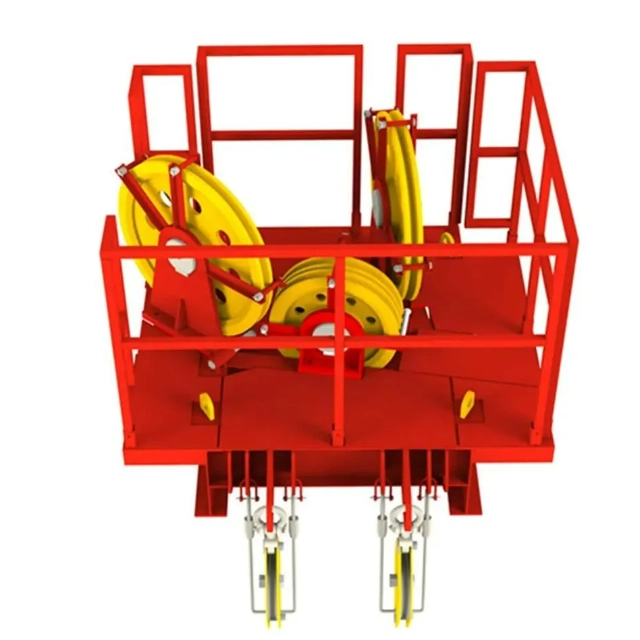
The Drilling Rig Crown Block operates as the critical load-distribution hub of your operation. It dictates the overall efficiency of the entire hoisting system. You should never view it merely as a static structural component. Substandard sheaves or misaligned frames frequently lead to accelerated drilling line wear. They cause excessive drawworks strain and result in costly tripping delays. Operators must actively avert these catastrophic downtime scenarios and critical safety hazards.
To maximize operational uptime and ensure strict compliance, procurement engineers and rig managers must systematically evaluate these components. You need to assess them based on precise engineering tolerances. You must demand integrated safety mechanisms and long-term operational efficiency. Making an informed choice protects your crew and streamlines daily rig operations. You will learn how mechanical advantage, rigorous maintenance metrics, and proper material selection combine to optimize your hoisting capabilities.
Key Takeaways
Mechanical Advantage: Proper reeving configurations distribute thousands of tons of load, reducing drawworks stress and enabling faster, smoother tripping operations.
Risk Mitigation: High-quality units feature rope blocking devices and strict adherence to API 4F standards to prevent wire rope mis-reeving and catastrophic failures.
Procurement Criteria: Optimal selection requires assessing load safety margins (1.2–1.5x), precise sheave groove tolerances (+1 to 2mm), and environmental durability.
Lifecycle Management: Tracking "Ton-Miles" and utilizing interchangeable sheaves significantly reduces long-term operational costs and maintenance overhead.
The Engineering Reality: How the Crown Block Drives Rig Efficiency
Every time you lift massive drill string loads, physics takes over. The sheave assembly translates immense weight into manageable tension. Consider a standard 10-line reeving system on a modern rig. This setup requires the fast line to move ten times faster than the traveling block. It proportionally divides the structural stress across multiple ropes. You effectively reduce the raw mechanical power required from the drawworks. This mechanical advantage remains the core operational purpose of your top-tier hoisting equipment. It allows the rig to handle thousands of tons easily.
Low-friction, high-precision bearings in the sheaves dramatically accelerate tripping operations. They allow for much smoother wire rope travel during fast ascents. You spend significantly less time making connections and pulling pipe out of the hole. Rig crews rely heavily on this speed to hit daily depth targets. Friction is the enemy of speed. Precision bearings eliminate excess drag. They keep the operation moving smoothly hour after hour.
A rigidly mounted framework is also absolutely essential. It transfers the immense vertical forces of the drill string downwards. The load pushes directly down the derrick legs into the substructure. This transfer maintains structural integrity under dynamic, shifting loads. You must maintain this sequence perfectly.
The main hook transfers the drill string weight directly to the traveling block.
The traveling block pulls firmly against the steel wire rope lines.
The upper sheaves absorb and divide this massive tension equally.
The main structural framework pushes the total weight straight down the derrick legs.
The rig substructure absorbs the final load, keeping the system completely stable.
Any misalignment disrupts this critical load path. It forces stress into vulnerable secondary structures and compromises safety.
Critical Safety Mechanisms You Can’t Afford to Ignore
Equipment failure at the top of the derrick creates catastrophic risks. You must prioritize specific, engineered safety mechanisms. Preventing rope mis-reeving is absolutely vital for rig stability. Sudden load shifts or high-vibration conditions can easily bounce the drilling line out of place. Integrated rope blocking devices, often called anti-jump guards, prevent this dangerous scenario. They keep the drilling line seated securely inside the machined sheave grooves. They effectively block the rope from slipping sideways.
Evaluating your hoisting system starts by verifying API 4F compliance. You should also check equivalent regional standards like SY/T5527. The framework and bail assembly must demonstrate certified metallurgical traceability. You cannot compromise on structural integrity here. Manufacturers must use non-destructive testing to verify weld quality. If a component lacks proper certification, it poses a severe threat to rig personnel. We strongly advise rejecting any equipment lacking full documentation.
High-quality units also manage fleet angles effectively. They are engineered to maintain an optimal angle relative to the drawworks below. This precise geometry prevents severe lateral wear on the fast line. It also ensures manufacturer-recommended dead wraps remain secure on the main drum. When you control the fleet angle, you protect both the wire rope and the drum grooves from premature degradation. Proper geometry prevents the rope from scrubbing aggressively against itself.
Best Practices for Rope Safety
Rig operators should visually inspect anti-jump guards before every major tripping operation. You should verify the dead wraps on your drawworks drum weekly. Never ignore unusual scraping sounds echoing from the derrick peak. They often indicate early alignment issues.
Evaluating Crown Block Specs: A Buyer’s Framework
Procurement engineers need a strict framework for component evaluation. You must specify units based on realistic, worst-case operational demands. First, evaluate the static load capacity and safety margins. We advise engineers to specify units featuring a rated capacity 1.2 to 1.5 times the anticipated maximum hoisting weight. This critical margin accounts for heavy jarring operations. It also covers sudden stuck-pipe scenarios where tension spikes rapidly. It provides a necessary safety buffer for your crew and the derrick.
Sheave and wire rope compatibility requires exact physical tolerances. Sheave groove diameters must typically measure 1 to 2mm larger than the specified wire rope diameter. Proper sizing prevents dangerous pinching, internal strand deformation, and premature core failure. A mismatched groove will destroy your expensive drilling line rapidly. You must measure grooves using a certified gauge during every routine maintenance cycle.
Environmental adaptability dictates your material selection process. Different operational environments demand specific metallurgy and specialized coatings. You must align your procurement strategy with these harsh environmental realities. A component built for the desert will quickly fail on an offshore platform.
| Operational Environment | Key Component Requirements | Routine Maintenance Focus |
| Deepwater / Offshore | Marine-grade anti-corrosion coatings, stainless steel fittings | Saltwater corrosion checks, seal integrity verification |
| High-Speed Drilling | Specialized high-rpm bearing configurations, advanced cooling | Frequent bearing lubrication, continuous heat monitoring |
| Arctic / Sub-zero | Low-temperature impact-resistant alloys, thermal guards | Cold-weather grease compatibility, brittle fracture checks |
| Desert / High Dust | Sealed bearings, dust-resistant enamel paints | Air purging, grit removal from main pivot points |
Maximizing ROI: Service Life, Ton-Miles, and Maintenance
You want your hoisting equipment to last as long as possible. Maximizing your equipment return on investment depends on rigorous tracking. Consistent maintenance extends hardware life dramatically. The industry standard for tracking wire rope and sheave wear is the Ton-Mile metric. It measures the total mechanical work done by the system. A precision-machined top block directly extends the number of Ton-Miles you can achieve before requiring a replacement. It reduces internal rolling friction and limits abnormal surface wear.
A well-maintained sheave assembly also supports rigorous slip-and-cutoff programs. These operational programs shift wear points evenly across the entire drilling line. They continuously move the sections experiencing high stress over the sheaves. This strategy extends the usable life safely and predictably. You save thousands of dollars on premature wire rope replacement costs.
Smart procurement focuses heavily on component interchangeability. You gain a massive logistical advantage by sourcing units featuring sheaves fully interchangeable with your traveling block. This shared-parts strategy drastically reduces on-site inventory requirements. It lowers your storage footprint on crowded rig floors. It also simplifies emergency field repairs for your maintenance crew. They only need to learn one standard bearing replacement procedure.
Predictable maintenance cycles keep operations running smoothly without surprise downtime. Establish baseline expectations for routine component care.
Pump fresh grease into the main bearings every 100 to 200 operational hours.
Conduct daily visual inspections of the primary lifting frame from the rig floor.
Check the auxiliary sand fishing pulleys for smooth, unrestricted rotation.
Monitor the primary sheave grooves using a specialized metal wear gauge.
Document all lubrication activities in the central rig management software.
Making Your Decision: Upgrading Your Hoisting System
You must critically assess your current rig limitations before purchasing new equipment. Audit your existing hoisting setup today. Look closely for signs of system fatigue. Short derrick heights, frequent drilling line replacements, or tripping bottlenecks strongly indicate a needed upgrade. If your crew constantly waits on the hoisting system to catch up, your current equipment is holding you back. You are losing valuable drilling time daily.
Evaluating OEM partners is the next crucial step in your upgrade journey. You should work exclusively with manufacturers who provide transparent testing data upfront. They must offer readily available replacement parts for immediate dispatch. Demand documented load-testing certifications before signing any purchase order. Trustworthy manufacturing partners always stand behind their engineering with verifiable proof.
Finally, consult directly with your engineering teams. You must match new unit capacities exactly to your specific drawworks output. Ensure the structural derrick load ratings perfectly align with your selected equipment. Do not guess these vital capacity numbers.
Conclusion
A high-quality load-distribution unit at the top of your derrick acts as a critical upfront investment. It pays continuous dividends by actively protecting the drawworks and extending wire rope life. It ultimately secures the daily safety of the entire rig crew. Relying on precise engineering tolerances completely transforms your hoisting system. Rigorous maintenance metrics like Ton-Miles turn potential structural liabilities into reliable drivers of operational efficiency. Contact an engineering specialist today to thoroughly review your hoisting system specifications. You can also download a detailed product selection guide to refine your equipment upgrade strategy.
FAQ
Q: How do you match a crown block to the correct wire rope size?
A: The sheave grooves on the crown block must be precisely machined to accommodate the wire rope. They typically require a groove diameter 1 to 2mm larger than the rope. A mismatched groove will rapidly degrade the rope's strands. It causes dangerous pinching and premature core failure. Always verify groove profiles using proper gauges during installation.
Q: What is the relationship between the crown block and the traveling block?
A: They operate together as a paired pulley system. The crown block remains stationary at the top of the derrick. The traveling block moves vertically below it. Together, they create a mechanical advantage. This allows the drawworks to lift massive drill string loads using significantly less pulling force.
Q: How often should crown block sheaves be inspected and lubricated?
A: Maintenance schedules vary by manufacturer and operating conditions. However, best practices dictate daily visual inspections for wear and structural integrity. You should perform comprehensive bearing lubrication every 100 to 200 operational hours. Consistent greasing prevents bearing failure and ensures smooth tripping operations.
Q: Why are Ton-Miles important when evaluating crown block performance?
A: Ton-Miles measure the total mechanical work done by the drilling line. A precision-engineered crown block significantly reduces friction and abnormal wear. This allows the rig to safely log more Ton-Miles. You achieve longer intervals before requiring a costly rope slip-and-cutoff procedure or a full line replacement.


