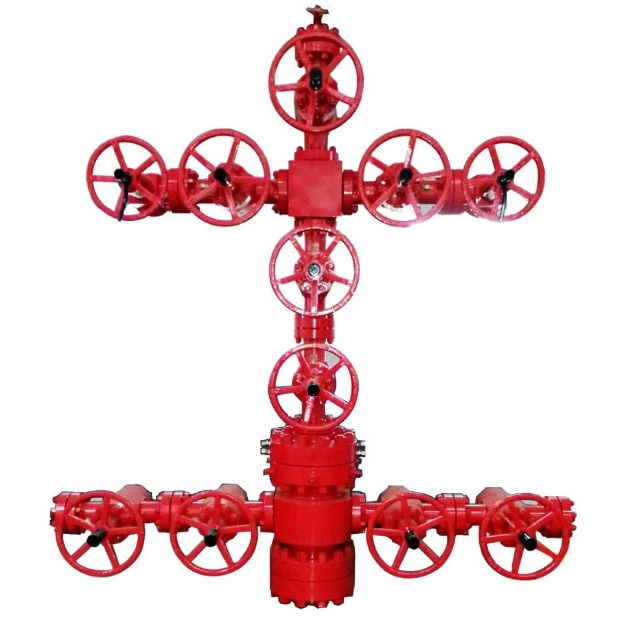
Selecting a Wellhead Christmas Tree for onshore operations is a critical bottom-of-funnel engineering decision. The right specification mitigates dangerous blowout risks perfectly. It prevents expensive non-productive time and ensures strict regulatory compliance across the field. Engineers frequently face a tough balancing act during procurement. Over-engineering leads to unnecessary capital expenditure upfront. Conversely, under-specifying equipment invites catastrophic failure inevitably. This remains especially true in highly corrosive or high-pressure gas environments. This guide breaks down ten critical technical factors you must evaluate. We help you shortlist an api 6a christmas tree efficiently. We move beyond basic functionality entirely. We focus intensely on lifecycle performance, design standardization, and rigorous vendor verification. You will learn how to align fundamental equipment limits with harsh subsurface realities.
Key Takeaways
Condition-Driven Selection: Material classes (AA-HH) and pressure ratings (2,000–20,000 PSI) must be dictated by verifiable fluid composition and Maximum Anticipated Surface Pressure (MASP).
Compliance is Baseline, Not a Differentiator: Ensure strict adherence to API Spec 6A (21st Edition) Product Specification Levels (PSL) and Performance Requirements (PR), particularly PSL 3G for gas wells.
Architecture Trade-offs: The choice between conventional and unitized trees depends heavily on space constraints, acceptable leak paths, and the need for future component-level maintenance.
Seal Integrity: Prioritize metal-to-metal seals for high-risk, high-temperature wells, limiting elastomeric seals to temporary testing tools due to explosive decompression risks.
Establishing Baseline Well Parameters (Factors 1-3)
Your primary decision stage focus involves aligning fundamental equipment limits with harsh subsurface realities. This systematic approach helps you filter out incompatible product lines immediately.
1. Maximum Anticipated Surface Pressure (MASP) and Temperature Ratings
Determine required pressure ratings meticulously before contacting vendors. Standard wellhead ratings typically range from 2,000 to 20,000 PSI. You must calculate the Maximum Anticipated Surface Pressure based on accurate reservoir data. Engineers determine MASP by taking maximum bottom-hole pressure and subtracting the hydrostatic weight of a full gas column. Once you define MASP, map operational temperature spans against standard API classifications. For example, Class LU covers extreme environments spanning -46°C to 121°C. Class U limits upper ranges to 121°C without guaranteeing low-temperature flexibility. Always demand certified temperature cycle testing data from manufacturers. Equipment behaves unpredictably near extreme classification limits. Reject any vendor claims lacking physical testing evidence. Relying purely on theoretical engineering models invites blowout disasters.
2. Fluid Composition and Material Class Requirements
Assess the exact presence of hydrogen sulfide, carbon dioxide, and harsh chlorides. Produced water salinity also heavily impacts material survivability. Match your fluid corrosivity directly to API 6A Material Classes. Standard carbon steel works perfectly for non-corrosive, sweet environments. These fall under Class AA or BB designations. However, you must specify exotic alloys or specialized cladding for high H2S conditions. NACE MR0175 standards dictate strict metallurgical limits for sour service. These aggressive environments demand Class FF or HH materials. Using subpar steel in sour gas wells guarantees rapid degradation. Severe sulfide stress cracking occurs rapidly under pressure. We always recommend analyzing comprehensive fluid samples before finalizing metallurgy. Upfront capital expenditure on corrosion-resistant alloys effectively prevents catastrophic wellhead failures down the line.
API Material Class | Minimum Material Requirements | Typical Application Environment |
AA / BB | General Service (Carbon/Low Alloy Steel) | Non-corrosive, sweet oil and gas production |
CC / DD | Sour Service (Carbon/Low Alloy Steel) | Low H2S levels, moderate CO2 presence |
EE / FF | Sour Service (Stainless Steel Alloys) | High CO2, moderate H2S, harsh chlorides present |
HH | Sour Service (Corrosion Resistant Alloys) | Extreme H2S levels, high CO2, highly aggressive brines |
3. Specific Well Type Geometry (Oil vs. Gas)
Evaluate the differences between standard vertical bores and Y-Body designs carefully. Standard vertical trees suit many conventional oil operations perfectly. Gas wells often demand an entirely different architectural approach. High-velocity gas flows constantly carry abrasive sand particulates. These fast-moving particulates destroy internal valve components quickly. You should evaluate Y-Body designs for these exceptionally harsh conditions. Manufacturers machine these robust trees from a single solid steel forging. This creates a highly efficient straight-line fluid flow path. It severely limits internal scouring and wall erosion. It also maximizes overall structural integrity immensely. The Y-Body configuration easily handles extreme abrasive forces. It outperforms traditional vertical configurations significantly when managing heavy sand production.
Navigating API 6A Regulatory & Performance Standards (Factors 4-5)
Your focus here requires deciphering the exact level of testing and traceability required. You must ensure compliance and safety without overpaying for unnecessary manufacturing tiers.
4. Product Specification Level (PSL) Matching
Product Specification Levels dictate the strict rigor of manufacturing quality control. They heavily govern metallurgical testing, welding controls, and component traceability. Levels range systematically from PSL 1 through PSL 4. Conduct a rigorous quantitative risk analysis for your specific site. Specify PSL 3 or PSL 4 for critical onshore environments. PSL 3 mandates extensive non-destructive examination on all components. It requires magnetic particle inspection or ultrasonic testing on all wetted surfaces. Natural gas wells bring highly specific migration challenges. Ensure you explicitly request PSL 3G for high-pressure gas applications. This distinct tier requires mandatory additional nitrogen gas-tightness testing. Standard hydrostatic testing alone cannot prove secure gas containment. Nitrogen testing confirms absolute seal integrity against invisible, high-pressure gas migration.
5. Performance Requirement (PR) Tiers
Evaluate whether your operation requires baseline PR 1 or stringent PR 2 testing tiers. We strongly suggest specifying PR 2 for any long-term production reliability. Performance Requirement 1 only mandates basic static functionality verification at room temperature. PR 2 requires mandatory, rigorous dynamic pressure and extreme temperature cycling tests. The equipment must survive over 160 demanding operational cycles. It must hold pressure perfectly at both maximum and minimum rated temperatures during dynamic operations. Do not accept a simple marketing brochure claim. Demand verifiable test lab data directly from the vendor. This raw documentation confirms true PR 2 compliance independently. It proves the equipment handles repeated operational stresses in real-world field environments.
Structural Design and Architecture (Factors 6-8)
This stage demands comparing physical form factors carefully. You must evaluate options based on footprint size, long-term maintenance philosophies, and failure-point reduction.
6. Conventional vs. Unitized (Solid Block) Configurations
Conventional configurations utilize independently bolted valve assemblies. This traditional approach offers high operational flexibility. You can easily replace individual damaged valves directly on-site. However, it introduces multiple bolted flange connections throughout the stack. Each flanged connection represents a potential future leak path. Unitized configurations integrate the master and wing valves into one forged block. They provide a significantly smaller physical footprint overall. Multi-well pads benefit greatly from this compact design strategy. They also provide much higher safety margins mechanically. Fewer internal leak points make them ideal for high-pressure operations. Be acutely aware of the primary maintenance trade-off. You must replace the entire solid block if a single internal valve seat fails.
Feature | Conventional Configuration | Unitized (Solid Block) Configuration |
Design Structure | Multiple bolted valve components stacked together | Single forged steel block integrating all main valves |
Footprint | Large, heavy, and vertically demanding | Compact, lightweight, and low-profile |
Leak Paths | High risk (multiple external flanged joints) | Low risk (minimal external mating connections) |
Maintenance Flexibility | High (replace individual valves easily) | Low (requires entire master block replacement) |
Best Application | Standard pressure, high-accessibility low-risk wells | High-pressure, confined multi-well compact pads |
7. Seal Technology and Internal Geometry
Choose carefully between metal-to-metal seals and elastomeric polymers. Elastomeric seals face severe long-term operational limitations in modern wells. They suffer from rapid chemical degradation in sour H2S environments. They also risk catastrophic explosive decompression during sudden pressure blowdowns. High-pressure gas penetrates the internal rubber matrix easily. Rapid depressurization causes this trapped gas to expand violently. This phenomenon destroys the elastomeric seal entirely. Limit elastomeric elements strictly to temporary well testing tools. Require premium metal-to-metal seals for permanent production environments. Look closely at the internal machined seating geometry. Ensure internal seat angles utilize precise 45-degree chamfers. This specific angle supports natural self-cleaning during operation. It also provides optimal load bearing under extreme compressive forces.
8. Flange and Connection Integrity
Surface connections typically rely on either standard API 6B flanges, API 6BX flanges, or heavy-duty clamp hubs. We highly recommend specifying API 6BX "zero flange stand-off" designs. This specialized architecture ensures complete face-to-face contact between mated steel components. It drastically reduces severe fatigue failure risks. Intense equipment vibration easily damages standard gapped flanges over time. Rapid cyclic pressure fluctuations bend standard flange bolts continuously. A zero stand-off connection structurally isolates the bolting hardware from these destructive bending stresses. It secures the premium BX metal ring gasket perfectly within its groove. It maximizes connection integrity under extreme operational loading conditions.
Lifecycle Operations and Vendor Qualification (Factors 9-10)
Your final focus ensures the equipment actively supports future well phases. You must also validate the manufacturer's true production capacity and quality assurance capabilities.
9. Accommodating Future Well Interventions and Artificial Lift
Always plan carefully for future well lifecycle phases. Pre-configure the equipment now to avoid complete wellhead workovers later. Reservoirs deplete and often require artificial lift assistance eventually. Evaluate specialized crossover designs early in your project planning. Specify swab valves and upper tree connections thoughtfully. They must easily accommodate wireline lubricators and heavy coiled tubing strings.
Here are critical elements you must pre-configure:
Dedicated access ports for downhole chemical injection lines.
Upgraded swab valves to accommodate frequent wireline logging runs.
Engineered penetrations for future Electrical Submersible Pump power cables.
Standardized upper connections for seamless coiled tubing unit attachment.
Designing these vital access points upfront saves massive operational downtime later. It keeps your well fully adaptable to constantly changing reservoir dynamics.
10. Vendor Testing Facilities and Quality Control
A vendor must prove compliance entirely within their own facilities. Reject any vendors lacking verifiable, in-house QA/QC infrastructure immediately. Shortlist manufacturers who willingly provide documented proof of their technical capabilities. You cannot trust third-party outsourced testing for mission-critical wellhead infrastructure.
Demand hard evidence of the following testing capabilities:
Dedicated physical and chemical metallurgy laboratories for raw material verification.
High-pressure hydrostatic testing bays isolated for extreme pressure validation.
In-house X-ray and ultrasonic flaw detection systems for forged components.
Strict adherence to ISO 9001 and API Q1 quality management frameworks.
Manufacturers controlling their complete supply chain deliver far superior reliability. Inspect their testing calibration certificates personally during your technical vendor audits.
Conclusion
Selecting superior equipment requires translating baseline subsurface data into precise engineering specifications. You must prioritize long-term field reliability over short-term component savings. Avoid commoditized purchasing practices entirely. Weigh the upfront capital expenditure of unitized designs against the massive operational savings of zero-leak operations.
Follow these essential next steps before finalizing procurement:
Draft a standardized Request for Quote demanding specific Product Specification Level traceability explicitly.
Require verified Performance Requirement 2 cycle test data directly from the manufacturer's lab.
Demand detailed CAD drawings of all internal seal geometries for engineering review.
Conduct a physical vendor audit to verify in-house testing laboratory capabilities thoroughly.
FAQ
Q: What is the difference between PSL 3 and PSL 3G in API 6A?
A: PSL 3G includes all the stringent metallurgical and traceability requirements of PSL 3, but adds mandatory additional gas-testing (nitrogen testing) to ensure absolute seal integrity against gas migration.
Q: Can elastomeric seals be used in an API 6A Wellhead Christmas Tree?
A: While permitted under certain lower-tier specifications, they are generally restricted to temporary testing equipment or low-pressure/low-temperature non-corrosive wells due to risks of chemical degradation and explosive decompression. Metal-to-metal seals are the industry standard for reliable production.
Q: Why choose a Y-Body Christmas Tree over a traditional vertical tree?
A: Y-Body trees are machined from a single forging with a straight-line flow path, making them highly resistant to erosion and scouring. They are specifically evaluated for high-velocity gas wells or wells producing abrasive sand.


